I’ve resigned from the Evidence for Democracy (E4D) Board of Directors. It was a difficult choice and I’ll miss it.
I continue to be an enthusiastic supporter of E4D and I’m excited to see it grow its impact. There is significant room to grow science and science advocacy in Canada. E4D plays a unique role in making that case and helping turn it into action. I hope you, too, will consider following and supporting them.
It has been a privilege to be part of E4D’s journey from its early days as a small start up NGO to a nationally recognized organization. I remember the Stand Up for Science rallies in 2013 fondly. That was over 12 years ago. I’m proud of where it is today.
Once I passed the ten year milestone, I began thinking it was time to step down. I’ve been involved for nearly 13 years at this point. Change in leadership, perspective, and energy is important. E4D has recruited fantastic new board members and staff ready to carry its mission forward. I’ll be cheering for them.
Aside from believing sincerely in its mission, one of the biggest reasons I stayed involved with E4D so long is the people. I enjoy thinking alongside the board, staff, and supporters about Canada’s support for science, the connections between science and society, and the links between evidence, transparency, and a well-functioning democracy. I feel very fortunate to have met so many smart, insightful, and inspiring people connected to E4D at all levels.
I’m not sure what my next outlet will be for my science and education interests (outside my regular job). The short term will involve a break. But in the medium term I expect to be keen to contribute somewhere. Suggestions are welcome!
Photos: March for Science kick off rally in Toronto, 2017. Credit: Paul Martin
Assistant Professor (Teaching Stream) at the Department of Physics and Environmental Sciences (DPES), University of Toronto Scarborough.
This job is an amazing fit for me.
Here’s a few reasons why:
Academia
I’ve wanted a job in science. But I don’t only want to do science. I want a job that enables me to teach and do public outreach in a meaningful way. I spent a great deal of time and effort over the last decade working in education through NGOs, companies, and at U of T in a variety of roles. I also have a teaching degree. This position is teaching-focused, which is great, in addition to allowing me to continue to do research.
As an academic, I’ll also be able to continue doing science advocacy. Many of my former colleagues have gone to work for government science departments, such as Environment and Climate Change Canada (ECCC). It’s a nice career path, with stability and important work. But public servants are limited in their ability to criticize government policy, which I’ll be free to do. Given the continuing struggle to keep facilities like PEARL funded, the overall lack of ambition on many science topics, this privilege will be put to good use.
Dan discussing science engagement at U of T’s Rawtalk Live event (May 30, 2018).
Downtown U of T vs. Scarborough
I’ve spent the last 15 years living and working near downtown. The U of T downtown campus (UTSG) location has clear advantages. There’s an appealing energy and convenience to being close to the core of Canada’s largest city.
Royal Ontario Museum
But I wanted a change. I grew up essentially across the street from the Ottawa Greenbelt, and spent the warmer months of the year camping and cottaging in the surrounding rural areas of Ontario. Downtown Toronto doesn’t have enough greenspace. I spent the last several years living next to High Park. It was a great way to find balance. The U of T Scarborough campus has a strong environmental focus and is adjacent to a large forest, which is immensely appealing.
Leaf in High Park on a rainy day
I’ve moved to the east end of Toronto (Upper Beaches), and aim to do part of my commute by bike in the warm months, since there are trails that run from UTSC to GO Transit stations. That’ll be much nicer than biking along College St. to downtown U of T!
UTSC location (from Google Maps). Lake Ontario is at the bottom-right. Red marker shows where I’ll be working.
I have to admit one big downside: public transit in Scarborough is badly inadequate. I’m now enthusiastically cheering for Toronto (& other transit-funding levels of government) to build the Eglinton LRT line out to UTSC.
Interdisciplinary department
I’m not joining a physics department. DPES is a mix of physics, chemistry, astronomy, and environmental sciences. That’s also a quick way to summarize my academic background. I did my B.Sc. in astronomy & astrophysics, my M.Sc. in physics, and my Ph.D. in physics with a collaborative program in environmental studies. I’ve also spent considerable time engaged with environmental policy topics. I’m looking forward to interacting with colleagues across these fields. Ideally, I’d like to build a course or two that crosses disciplinary boundaries.
Experimental physics and environmental issues
My specific areas of focus will be exactly my areas of core interest: experimental physics and environmental connections to physics. One of the first large tasks I’m undertaking is a complete re-building of the undergraduate physics laboratory courses. I’m thrilled – this is exactly the type of project I’m keen to do. I’ll also be creating a course on atmospheric physics. Other ideas are floating around, too, but I should leave something for later blog posts.
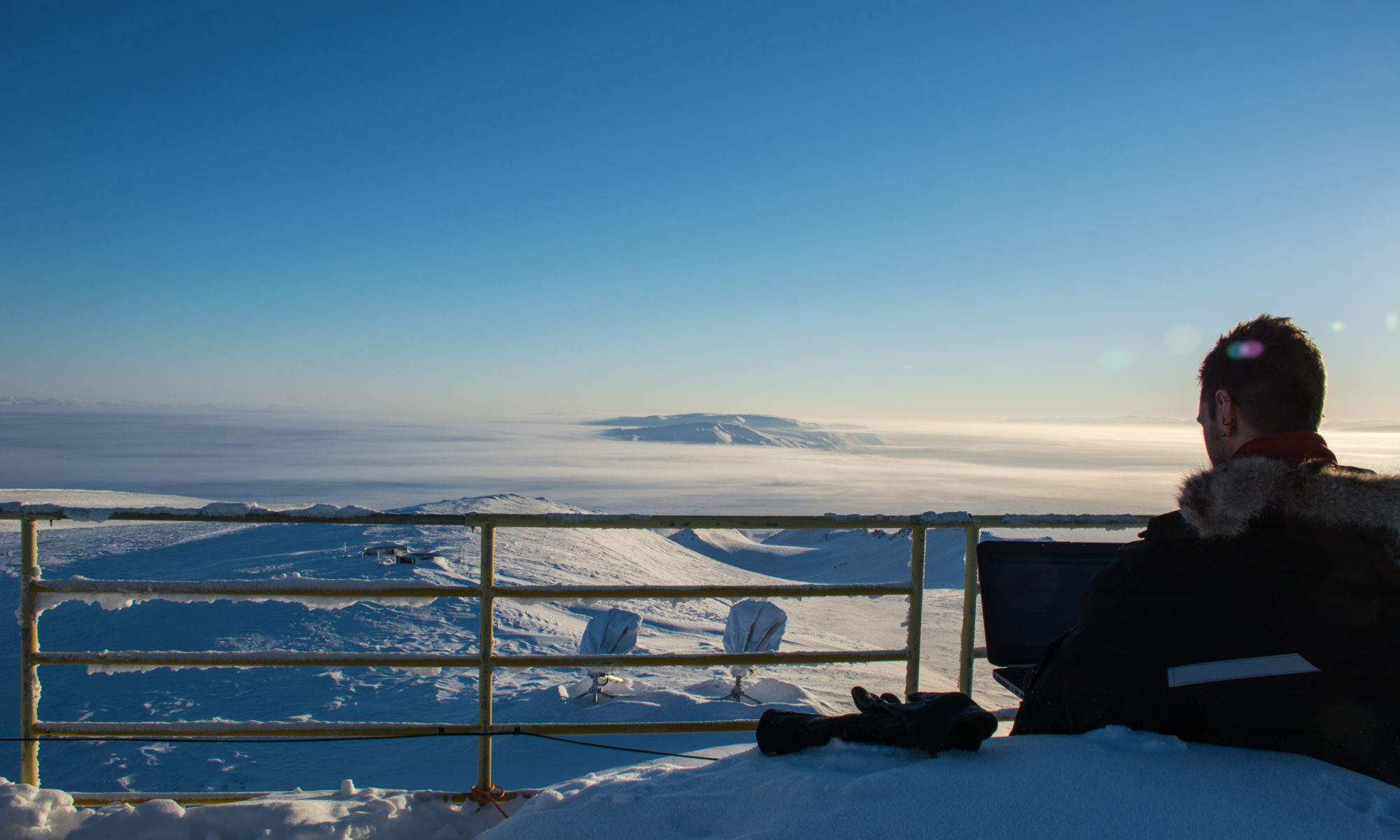
Dan adjusting beamsplitter door of the PEARL 125HR spectrometer during the 2015 ACE/OSIRIS validation campaign.
Summary
I expect to be (very!) busy for the next few months (years?) as I get started with this exciting new chapter in life. There are challenges ahead. But I’m proceeding with enthusiasm. I’m joining a great institution and department. I’m still close enough to collaborate with my friends downtown at U of T and at ECCC. And if I need the excitement of downtown Toronto, there’s always the weekends.